Promises of increased training effects, faster recovery, and improved performance – the jungle of nutritional supplements can be difficult to navigate. Whether a supplement “works” is not a binary assessment and is highly dependent on the context. Attempting to provide some clarity, this article will be the first of a multi-article series to discuss the history, function, and utility of five well-researched supplements, based on a 2018 consensus statement from the International Olympic Committee (IOC).1 First out is caffeine.
A brief history of caffeine in sports
Caffeine, a staple in beverages such as tea and coffee, is the most widely consumed psychoactive substance in the world. Some of the earliest work on the effects of caffeine on muscle fatigue dates back to 1907 when two colleagues at Cambridge University used themselves as subjects in a remarkably well-executed set of experiments.2 During this time in the early 1900s, caffeine was used by athletes to improve sporting performance, along with other substances such as cocaine and heroin, to name a few.3 Although the aforementioned compounds are not thought of in an athletic context today and are both banned from usage by the World Anti-Doping Agency (WADA),4 caffeine is consumed by most athletes during competition to try and gain a competitive advantage.5,6
The history of caffeine usage in sports is not as straightforward as one might think. Caffeine was added to the list of banned substances by the IOC in 1984 and WADA in 2000, owing to its central nervous system stimulating effects.3 In 1984, a limit was set to a urinary concentration of 15 μg/ml,7 but was lowered to 12 μg/ml the following year.3 The intention was to limit any intake above that of normal foodstuff and social coffee drinking patterns that improve sporting performance.7 In reality, to reach these levels, athletes have to ingest 10-13 milligrams of caffeine per kilo body weight, equating to 700-900 mg of caffeine or 5-7 cups of coffee for a 70kg person.7,8 This far exceeds the lower limits of ≤3mg/kg body weight where caffeine can be performance enhancing.8
Caffeine was removed from the list of banned substances altogether in 2004.3 Urinary measures of caffeine excretion remained relatively unaltered following the reversal of the previous ban, suggesting that was already widely used.9 Caffeine consumption did however increase somewhat in the decade that followed.6
Caffeine and endurance performance
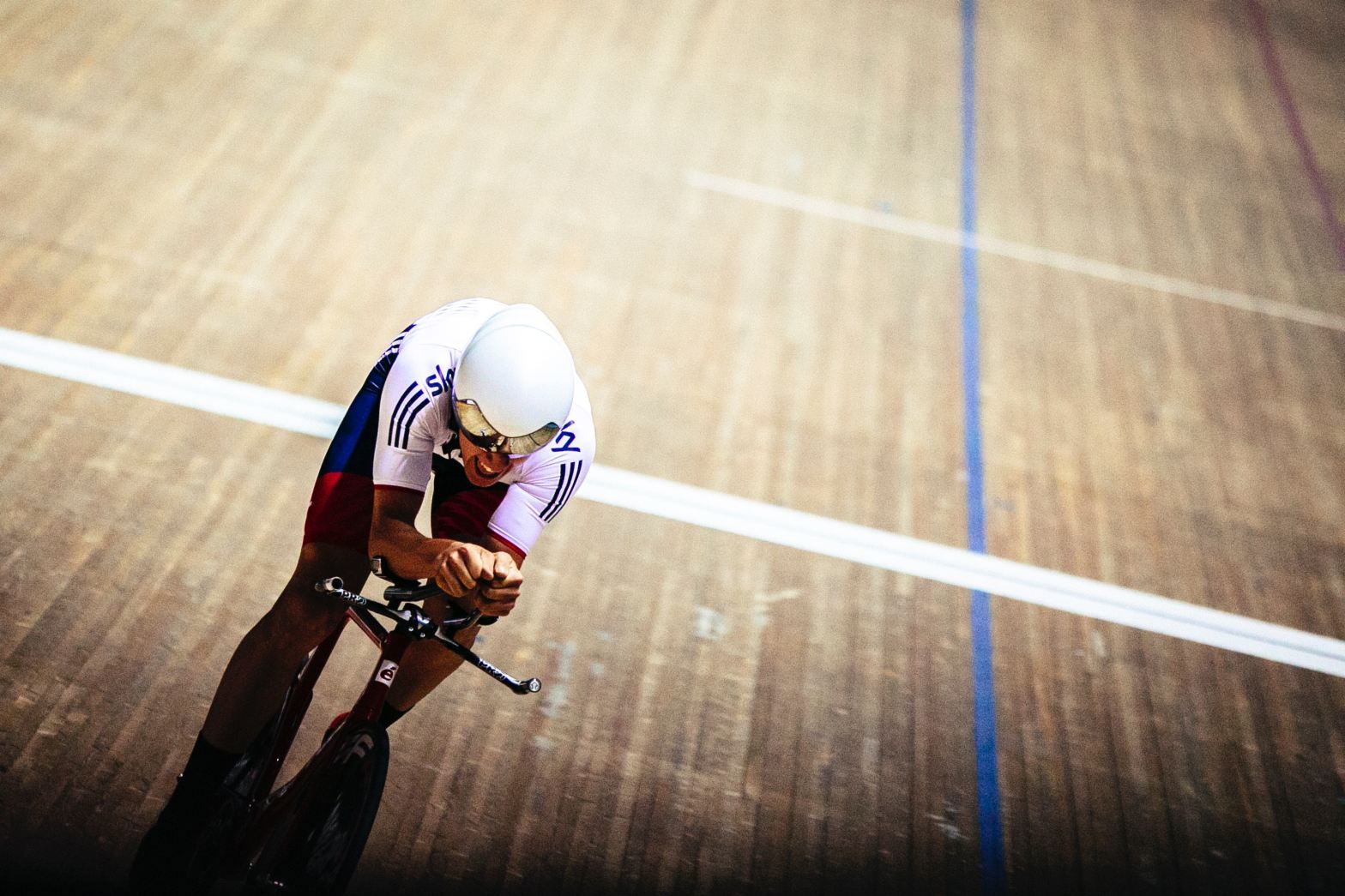
The margin between winning or losing an Olympic gold medal is as little as 1%,10 meaning that for elite athletes, even the smallest performance gain is desirable. Caffeine has been extensively researched in the context of endurance performance. Grouped analysis of 45 studies investigating the effects of caffeine supplementation on time-trial performance in various endurance sports (e.g., cycling, running, rowing, etc.) showed that caffeine trials were on average 2.2% faster than a placebo.11 There was no difference in the performance gains from caffeine across the exercise modalities or duration. Two studies reported slower times in the caffeine condition, which may be caused by genetic differences in how one responds to caffeine. All but one study used a caffeine dose within the typically recommended interval of 3-6 mg/kg body weight.3 The dosage did not affect performance suggesting that once it is high enough, no further benefits occur.
Caffeine and strength and power performance
Even though caffeine is most widely used in endurance sports, consumption among weight- and powerlifters is usually not far off.6,9 Still, research on its efficacy in a strength/power context is lacking. Nevertheless, combined data from 20 studies (10 for strength, 10 for power) found that caffeine ingestion resulted in small but meaningful effects on both strength (measured as 1 repetition max) and power (measured as vertical jump height or peak jump force).12 Interestingly, the strength performance improvement was limited to upper body strength as lower body strength was not acutely improved from caffeine supplementation. However, this is probably a consequence of a low sample size more than anything else.
Caffeine and team sports performance
Performance in team sports is multifactorial and often depends on the combination of endurance, power, agility, and technical and tactical skills. In a grouped analysis of 34 studies, several aspects of team sports performance were tested in the presence or absence of caffeine.13 Single sprint, repeated sprint ability and repeated jump performance showed small improvements following supplementation, which could be highly beneficial in sports such as basketball. Caffeine also accelerated time to completion in agility tasks and increased total running distance, sprinting distance, and number of sprints in simulated team sport match plays, where the perceived fatigue remained unaltered. In other words, the athletes could sprint more before reaching the same level of fatigue as without caffeine supplementation.
“Caffeine is a stimulant that possesses well-established benefits for athletic performance across endurance-based situations, and short-term, supramaximal and/or repeated sprint tasks.“
International Olympic Committee, 20181
Side effects
Some of the most common side effects of caffeine intake are anxiety, jitters, increased heart rate, insomnia, and reduced sleep quality. Anxiety and jitters affect performance on a sport-specific basis. For example, in sports with less skill and more physical ability such as powerlifting, increasing arousal with some accompanied anxiety might actually be useful. On the contrary, in highly skilled sports such as tennis or biathlon shooting, excessive jitters are probably detrimental.
Sleep is essential for health and performance. If caffeine is regularly taken late in the day for improved training sessions but at the expense of reduced recovery during sleep, the negatives probably outweigh the benefits. For competitions late in the day where one can afford to sacrifice a good night’s sleep afterwards, it is probably worth it. Nevertheless, one should aim to minimise any potential side effects.
Concluding remarks
Caffeine has been used by athletes for over a century and has well-proven performance-enhancing effects in most contexts, particularly endurance sports. Emerging research indicates that there is significant variety in how people respond to caffeine, and for some people, it may even be detrimental. This will be discussed in a follow-up article.
Practical recommendations
- Consume caffeine ~60 minutes before training/competition.
- Aim for 3-6 mg/kg body weight. Lower doses may also be useful. Higher doses are generally not able to improve performance but increase side effects.
- There are individual differences in how one responds to caffeine – if you do not experience positive effects, there is no need to take it.
- Be wary of side effects and minimise these – if sleep is impaired, avoid it in the afternoon or reduce the dosage.
References
- Maughan RJ, Burke LM, Dvorak J, et al. IOC consensus statement: dietary supplements and the high-performance athlete. Br J Sports Med. 2018;52(7):439-455. doi:10.1136/bjsports-2018-099027
- Rivers WHR, Webber HN. The action of caffeine on the capacity for muscular work. J Physiol. 1907;36(1):33-47.
- Guest NS, VanDusseldorp TA, Nelson MT, et al. International society of sports nutrition position stand: caffeine and exercise performance. J Int Soc Sports Nutr. 2021;18(1):1. doi:10.1186/s12970-020-00383-4
- WADA. The Prohibited List. World Anti Doping Agency. Accessed April 12, 2023. https://www.wada-ama.org/en/prohibited-list
- Del Coso J, Muñoz G, Muñoz-Guerra J. Prevalence of caffeine use in elite athletes following its removal from the World Anti-Doping Agency list of banned substances. Appl Physiol Nutr Metab. 2011;36(4):555-561. doi:10.1139/h11-052
- Aguilar-Navarro M, Muñoz G, Salinero JJ, et al. Urine Caffeine Concentration in Doping Control Samples from 2004 to 2015. Nutrients. 2019;11(2):286. doi:10.3390/nu11020286
- Delbeke FT, Debackere M. Caffeine: use and abuse in sports. Int J Sports Med. 1984;5(4):179-182. doi:10.1055/s-2008-1025901
- Spriet LL. Exercise and Sport Performance with Low Doses of Caffeine. Sports Med Auckl Nz. 2014;44(Suppl 2):175-184. doi:10.1007/s40279-014-0257-8
- Van Thuyne W, Delbeke FT. Distribution of caffeine levels in urine in different sports in relation to doping control before and after the removal of caffeine from the WADA doping list. Int J Sports Med. 2006;27(9):745-750. doi:10.1055/s-2005-872921
- Christensen PM, Shirai Y, Ritz C, Nordsborg NB. Caffeine and Bicarbonate for Speed. A Meta-Analysis of Legal Supplements Potential for Improving Intense Endurance Exercise Performance. Front Physiol. 2017;8. Accessed April 12, 2023. https://www.frontiersin.org/articles/10.3389/fphys.2017.00240
- Southward K, Rutherfurd-Markwick KJ, Ali A. The Effect of Acute Caffeine Ingestion on Endurance Performance: A Systematic Review and Meta–Analysis. Sports Med. 2018;48(8):1913-1928. doi:10.1007/s40279-018-0939-8
- Grgic J, Trexler ET, Lazinica B, Pedisic Z. Effects of caffeine intake on muscle strength and power: a systematic review and meta-analysis. J Int Soc Sports Nutr. 2018;15(1):11. doi:10.1186/s12970-018-0216-0
- Salinero JJ, Lara B, Del Coso J. Effects of acute ingestion of caffeine on team sports performance: a systematic review and meta-analysis. Res Sports Med. 2019;27(2):238-256. doi:10.1080/15438627.2018.1552146
Photo by dylan nolte on Unsplash
 THE PACE
One thought on “Exercise Supplementation Unveiled: Caffeine – History, Science, and Application”