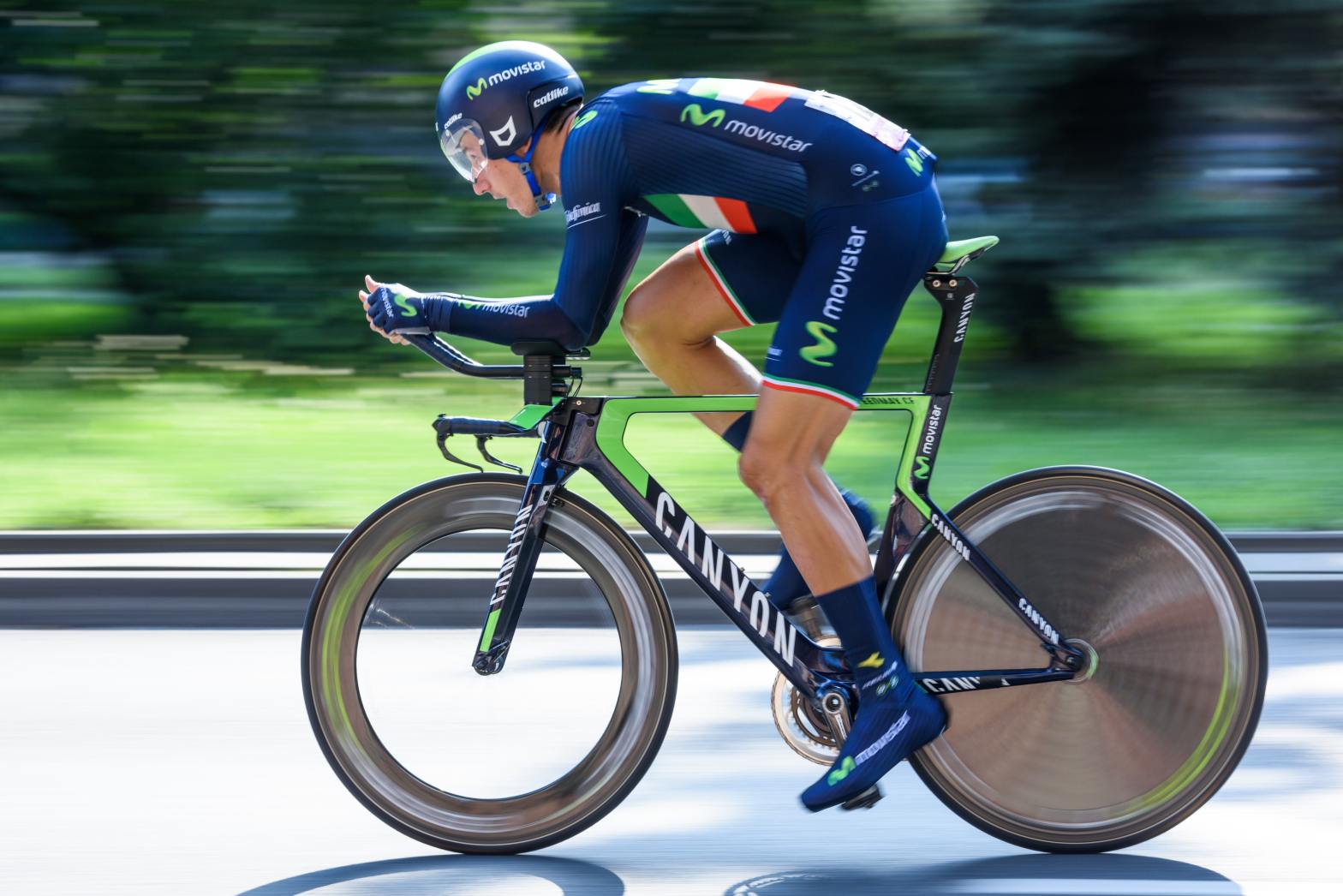
High intensity interval training is an effective way of improving endurance performance. With the numerous variables that can be altered when designing a training programme, the number of permutations can be overwhelming. In recent years, longer intervals (4-10 minutes) seem to have become increasingly more popular. More recently, several studies have been published investigating the concept of varying the intensity within the working intervals.1,2,3,4 This article will briefly outline the concept of varying the intensity within the working intervals, and how this may further improve endurance performance.
In the context of endurance sport, having a high VO2max is considered a prerequisite to be a competitive endurance athlete.5 VO2max, or maximal oxygen uptake, can be described as the highest rate at which oxygen can be taken up and utilised by the body during severe exercise,6 and is measured in either L/min or mL/kg/min. Closely linked to VO2max is cardiac output, which is the volume of blood pumped from the heart per minute. In other words, having a big and strong heart is desirable. Endurance training, especially at high intensities, induces cardiac hypertrophy which allows a greater volume of blood (and oxygen) supply to the working muscles and can thereby improve the VO2max.7
With respect to time spent training, high intensity interval training provides the most effective method to increase maximal oxygen uptake.8 When designing a training plan to improve oxygen uptake, one method that is commonly used is longer intervals with the purpose of maximising the time spent at a high fraction of VO2max; aiming to work ≥90% of VO2max is often used as a guideline to achieve this.9 Work-rates that elicit VO2max can at best be sustained for a few minutes. Although, if the power output is decreased from the same starting point, VO2max can in some instances be sustained for over 20 minutes(!).10 This phenomenon can be utilised when designing training sessions. In recent years, several studies have found that undulating the intensity during the work phase of the intervals can effectively induce a significantly longer time spent at higher intensities compared to traditional long intervals,2,4 even in situations when average power output is standardised for the two types of protocols. The way I see it, two main concepts have emerged.
Fast start intervals
First are ‘fast start’ intervals. The idea is to start the first part of an interval at a higher pace than normal after which the pace drops to a slightly lower intensity for the remainder of it. In a study by Rønnestad, Rømer, and Hansen on cross-country skiers,2 a 1.5-minute fast start was followed by 3.5 minutes at 85% of the starting speed resulting in a higher average oxygen uptake than a 5-minute interval at 90% of the relative speed. Five intervals were done per session and all participants completed both protocols twice. The fast-start session resulted in a significantly higher average VO2 than the traditional intervals. Moreover, the participants rated their perceived exertion significantly lower for the fast-start intervals compared to the traditional intervals despite the average speed being the same.
Undulating intervals
The second concept is using short bursts of higher intensity within the work interval. Much like the fast-start intervals, this can result in a higher average VO2 over the intervals even though the sessions are not necessarily perceived as harder.4 Over time, these elevations in intensity should theoretically result in a greater training response. A programme that has gained some popularity is 30-15 intervals. Basically, it consists of 9.5-minute blocks where 30 seconds are done at a high intensity followed by 15 seconds at half of the 30 second power. The goal is to achieve the highest average power as possible over the session, so the 30 second bouts will be as hard as possible, yet sustainable over all intervals.
In a 10-week trial on well-trained cyclists,1 3×9.5 minutes of 30-15s (short intervals, SI) was compared to 4×5 mins (long intervals, LI) constant power intervals. The total work time in a session was 19.5 mins for the SI group and 20 mins for the LI group. The intervals were conducted twice per week; a standardised low-intensity protocol was also conducted by both groups. There was no difference in rated perceived exertion (RPE) between the two protocols, despite this, the SI group significantly increased their maximal oxygen uptake by 8.7% (± 5.0%) whereas a non-significant increase of 2.6% (± 5.2%) was found in the LI group. With that said, long intervals were still an effective means to improve performance. For example, both SI and LI significantly improved their average 40-minute time-trial power output (12% ± 10% vs 4% ± 4%). One possible cause for the greater improvement in the SI group was that their protocol resulted in a greater mean power output throughout the study compared to the LI protocol, even though the effort was the same for both groups. Unfortunately, this study did not measure VO2 during training. However, Almquist et al.11 looked into the acute physiological responses to the same SI and LI protocols. The 30-15 intervals resulted in a 56% (± 76%) longer time spent above 90% of VO2max compared to the traditional intervals.
More recently, Bossi et al.4 conducted an experiment where they compared the acute responses (including VO2) in a somewhat similar undulating protocol (SI), to a constant intensity protocol (LI). Both protocols were composed of 6×5 mins intervals interspersed by 2.5 minutes of active recovery. Within the 5-minute SI intervals, the intensity varied; there were 30 seconds of hard work followed by 60 seconds at 77% of the 30 second work-rate which was repeated throughout the intervals. The last 60 second bout turned into 90 seconds to fill the full 5 minutes. The variation in power output in SI resulted in a 43% longer time spent >90% VO2max compared to LI, even though the average power remained the same between the protocols.
Mechanisms
What drives this increased oxygen demand that further stresses the cardiovascular system is yet to be fully elucidated. However, it seems to partly depend on the increased metabolic demand of the pulmonary muscles. In Bossi’s study,4 increased ventilation was measured in the SI group which had a moderate correlation with the increase in VO2 observed. Moreover, the increased oxygen cost of the muscular contractions during the high-intensity surges may also play a role in increasing VO2 acutely.
Summary
So why does this matter? From the studies that have been discussed, the participants did not perceive these types of undulating or fast-start protocols as being harder, yet the results were in favour of greater improvements in either performance or VO2max. These results may not be applicable to every single person, since there were individual differences in how the SI protocols were perceived and the outcomes from them. But generally, it does seem like a good approach to increase the cardiovascular stress and thereby potentially promote greater improvements in maximal oxygen uptake and performance.
References
- Rønnestad BR, Hansen J, Vegge G, Tønnessen E, Slettaløkken G. Short intervals induce superior training adaptations compared with long intervals in cyclists – an effort-matched approach. Scand J Med Sci Sports. 2015;25(2):143‐151. doi:10.1111/sms.12165
- Rønnestad BR, Rømer T, Hansen J. Increasing Oxygen Uptake in Well-Trained Cross-Country Skiers During Work Intervals With a Fast Start [published online ahead of print, 2019 Oct 15]. Int J Sports Physiol Perform. 2019;1‐7. doi:10.1123/ijspp.2018-0360
- Rønnestad BR, Hansen J, Nygaard H, Lundby C. Superior performance improvements in elite cyclists following short-interval vs effort-matched long-interval training. Scand J Med Sci Sports. 2020;30(5):849‐857. doi:10.1111/sms.13627
- Bossi AH, Mesquida C, Passfield L, Rønnestad BR, Hopker JG. Optimizing Interval Training Through Power-Output Variation Within the Work Intervals [published online ahead of print, 2020 Apr 3]. Int J Sports Physiol Perform. 2020;1‐8. doi:10.1123/ijspp.2019-0260
- Joyner MJ, Coyle EF. Endurance exercise performance: the physiology of champions. J Physiol. 2008;586(1):35‐44. doi:10.1113/jphysiol.2007.143834
- Bassett DR Jr, Howley ET. Limiting factors for maximum oxygen uptake and determinants of endurance performance. Med Sci Sports Exerc. 2000;32(1):70‐84. doi:10.1097/00005768-200001000-00012
- Wisløff U, Ellingsen Ø, Kemi OJ. High-intensity interval training to maximize cardiac benefits of exercise training?. Exerc Sport Sci Rev. 2009;37(3):139‐146. doi:10.1097/JES.0b013e3181aa65fc
- Milanović Z, Sporiš G, Weston M. Effectiveness of High-Intensity Interval Training (HIT) and Continuous Endurance Training for VO2max Improvements: A Systematic Review and Meta-Analysis of Controlled Trials. Sports Med. 2015;45(10):1469‐1481. doi:10.1007/s40279-015-0365-0
- Rønnestad BR, Hansen J. Optimizing Interval Training at Power Output Associated With Peak Oxygen Uptake in Well-Trained Cyclists. J Strength Cond Res. 2016;30(4):999‐1006. doi:10.1519/JSC.0b013e3182a73e8a
- Billat V, Petot H, Karp JR, Sarre G, Morton RH, Mille-Hamard L. The sustainability of VO2max: effect of decreasing the workload. Eur J Appl Physiol. 2013;113(2):385‐394. doi:10.1007/s00421-012-2424-7
- Almquist NW, Nygaard H, Vegge G, Hammarström D, Ellefsen S, Rønnestad BR. Systemic and muscular responses to effort-matched short intervals and long intervals in elite cyclists [published online ahead of print, 2020 Apr 8]. Scand J Med Sci Sports. 2020;10.1111/sms.13672. doi:10.1111/sms.13672
Photo by Jacek Dylag on Unsplash
 THE PACE
Very informative and very well written!