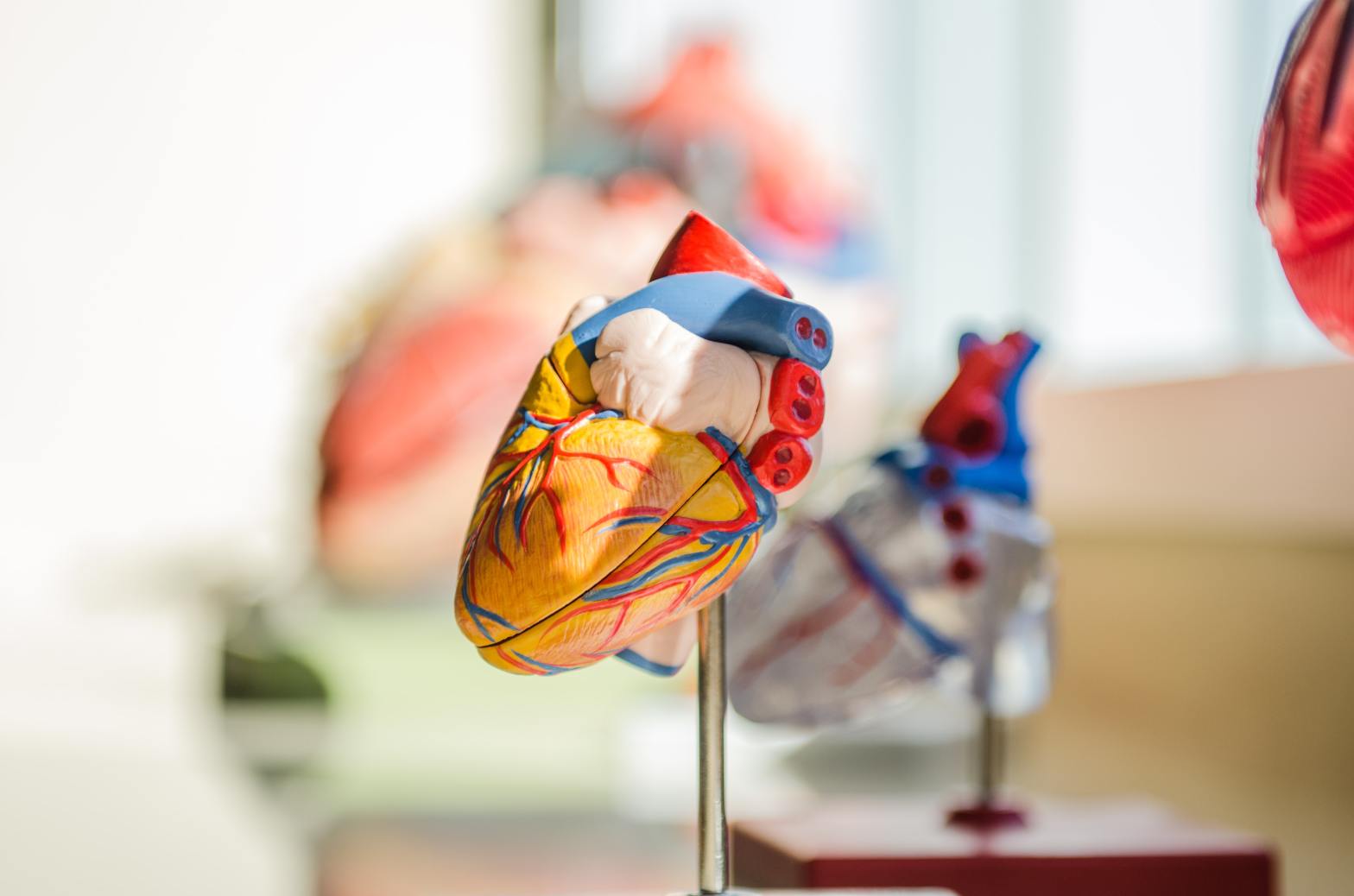
The human heart is a vital organ with astonishing plasticity. The causes for cardiac remodelling can either lie in a pathological condition or exercise training, yet the resulting alterations can to some extent overlap. Most heavily affected from exercise induced remodelling is the left ventricle of the heart, which is the chamber from which the blood is pumped into the systemic circulation.1 Structural and functional changes to the heart are closely associated to measures of endurance performance.2 This article was set out to describe how cardiac remodelling varies between road cyclists on different proficiency levels.
Growth of cardiac muscle cells (i.e. cardiac hypertrophy) is a common consequence of exercise training and paramount for endurance performance. Simply speaking, cardiac remodelling can be subdivided into either eccentric hypertrophy, which is ventricular enlargement and concentric hypertrophy, which is increments in heart wall thickness.3
To gain a further understanding of the extent to which cardiac remodelling differs between different proficiency levels in cycling, Brown et al.4 conducted a study investigating the left-ventricular remodelling of elite male cyclists (World-Tour and Pro Continental), sub-elite cyclists (UK 1st, 2nd, and 3rd category), and healthy non-smoking non-athletes. The study looked at several functional and anatomical measures, relevant findings for this article have been summarised in table 1. Significant differences were observed in the left ventricle diameter and thereby also the end-diastolic volume. The largest difference in in end-diastolic volume was between the non-athlete and sub-elite group, and a substantially smaller difference was seen between the sub-elite and elite cyclists.
Table 1. The anatomical and functional differences between elite-cyclists, sub-elite cyclists, and non-athletes in Brown et al.4
| Elite cyclists | Sub-elite cyclists | Non-athletes | |
|---|---|---|---|
| LVd (mm) | 54.8 ± 3.8*† | 52.6 ± 3.7† | 49.5 ± 3.7 |
| LV EDV (mL) | 162 ± 18*† | 149 ± 19† | 104 ± 21 |
| MWT (mm) | 9.6 ± 0.7*† | 8.3 ± 0.5† | 7.6 ± 0.6 |
| RWT | 0.36 ± 0.04*† | 0.33 ± 0.03 | 0.32 ± 0.04 |
| LV mass | 210 ± 31*† | 163 ± 26† | 133 ± 24 |
*P<.05 vs sub-elite.
†P<.05 vs non-athlete.
As exercise intensity is increased, the working muscles require more oxygen and thereby more blood. In general, a main limiting factor for high-intensity exercise is the heart’s capacity to supply blood, which mostly depends on the cardiac output.5 Elevations in preload (i.e. volume of blood in the left ventricle before it is pumped out) is one of the primary drivers for left ventricular enlargement from endurance exercise.4 Consequently, this leads to an increased stroke volume and cardiac output. Concomitantly, a proportional increase in the left ventricular wall thickness occurs to normalise the increments in wall stress from the now greater volume of blood, in accordance with Laplace’s law.
As expected, even though the sub-elite group presented a significantly greater left ventricular volume than the non-athletes, the relative wall thickness (measure for proportion between left ventricular diameter and wall thickness) remained the same. In contrast, the elite cyclists that presented the greatest left ventricular volume also showed a disproportional increase in wall thickness.
Even though mean heart wall thickness was significantly greater in the elite-cyclists compared to the sub-elite and non-athlete groups, none exceeded a thickness of 12 millimetres.4 Interestingly, Abergel et al.6 conducted cardiac screenings of 286 Tour de France cyclists in 1995 and 1998. In contrast to Brown et al.4 they found that 8.7% presented a mean wall thickness of >13 mm. It was argued that a confounder to this great disparity potentially could have been the performance enhancing drugs that were widely used by cyclists in the 90s and early 00s that have been shown to elicit left ventricular hypertrophy.4
Cardiac plasticity is a multifaceted concept with numerous variables affecting to what extent remodelling is attainable. Among these, sex plays a significant role in the adaptive response to exercise. Unfortunately, the study from Brown et al.4 initially discussed only included men. As described in a systematic review by Diaz-Canestro and Montero7, women present decreased levels of left ventricular remodelling compared to men. In absolute terms, they concluded that women present a 67% lower absolute improvement in end diastolic volume and stroke volume from endurance training. Albeit slightly reduced, the discrepancy persists even if the remodelling is calculated relative to baseline.
Overall exercise performance is determined by a multitude of factors, including lactate threshold and mechanical efficiency.8 Adaptations occur in many different bodily systems to accommodate exercise induced stress and increase performance. Maximal oxygen uptake (VO2max) is said to set the upper limit for the level of aerobic metabolism, thus it sets the upper limit for endurance performance.5,8 High oxygen uptakes are reached during intense exercise using large muscle groups, and represents an integration of several factors such as cardiac output, haemoglobin content, muscle blood flow, and muscle oxygen extraction. It has become increasingly clear that the most dominant factor for a high VO2max is a high stroke volume.8
Although, most longer endurance events are not done on an intensity that evoke VO2max. In fact, events longer than 10-15 minutes tend to be done at sub-maximal intensities. For example, maximal 10km running is performed at 90-100% of VO2max and marathon distances are generally ran on intensities corresponding to 75-85% of VO2max.8 This does not invalidate the importance of cardiac adaptations for submaximal endurance performance. Exercise induced cardiac remodelling which results in an increased stroke volume will reduce the relative intensity at a given work rate and allow for a greater oxidative energetic contribution at higher work rates.
To summarise, it is well established that the heart plays a central role for performance in endurance sport. Albeit the study discussed in this article shows significant differences in cardiac anatomy between different levels of cyclists, it does not explain the interaction between nature versus nurture; i.e. whether people with favourable baseline cardiac morphology became elite-athletes, or if the training has induced this superior cardiac remodelling which caused them to become elite athletes. In reality, nature sets the upper limit for the performance which through training can be approached. Elite-athletes tend to be those who genetically have an advantageous physiology for their sport, and have maximised their potential.9 With that said, even though you may not have the genetics of Chris Froome to become the next winner of the Tour de France, it is well established that endurance training does lead to cardiac remodelling and improve performance.
References
- Lovic D, Narayan P, Pittaras A, Faselis C, Doumas M, Kokkinos P. Left ventricular hypertrophy in athletes and hypertensive patients. J Clin Hypertens (Greenwich). 2017;19(4):413-417. doi:10.1111/jch.12977
- D’Andrea A, Limongelli G, Caso P, et al. Association between left ventricular structure and cardiac performance during effort in two morphological forms of athlete’s heart. Int J Cardiol. 2002;86(2-3):177-184. doi:10.1016/s0167-5273(02)00194-8
- Mihl C, Dassen WR, Kuipers H. Cardiac remodelling: concentric versus eccentric hypertrophy in strength and endurance athletes. Neth Heart J. 2008;16(4):129-133. doi:10.1007/BF03086131
- Brown B, Millar L, Somauroo J, et al. Left ventricular remodeling in elite and sub-elite road cyclists. Scand J Med Sci Sports. 2020;30(7):1132-1139. doi:10.1111/sms.13656
- Bassett DR Jr, Howley ET. Limiting factors for maximum oxygen uptake and determinants of endurance performance. Med Sci Sports Exerc. 2000;32(1):70-84. doi:10.1097/00005768-200001000-00012
- Abergel E, Chatellier G, Hagege AA, et al. Serial left ventricular adaptations in world-class professional cyclists: implications for disease screening and follow-up. J Am Coll Cardiol. 2004;44(1):144-149. doi:10.1016/j.jacc.2004.02.057
- Diaz-Canestro C, Montero D. The Impact of Sex on Left Ventricular Cardiac Adaptations to Endurance Training: a Systematic Review and Meta-analysis. Sports Med. 2020;50(8):1501-1513. doi:10.1007/s40279-020-01294-9
- Joyner MJ, Coyle EF. Endurance exercise performance: the physiology of champions. J Physiol. 2008;586(1):35-44. doi:10.1113/jphysiol.2007.143834
- Davids K, Baker J. Genes, environment and sport performance: why the nature-nurture dualism is no longer relevant. Sports Med. 2007;37(11):961-980. doi:10.2165/00007256-200737110-00004
Photo by jesse orrico on Unsplash
 THE PACE
Wow!
Fascinating read! I learned a lot, and particularly enjoyed this article! I am eagerly awaiting the next article!